Find out where the water is coming from
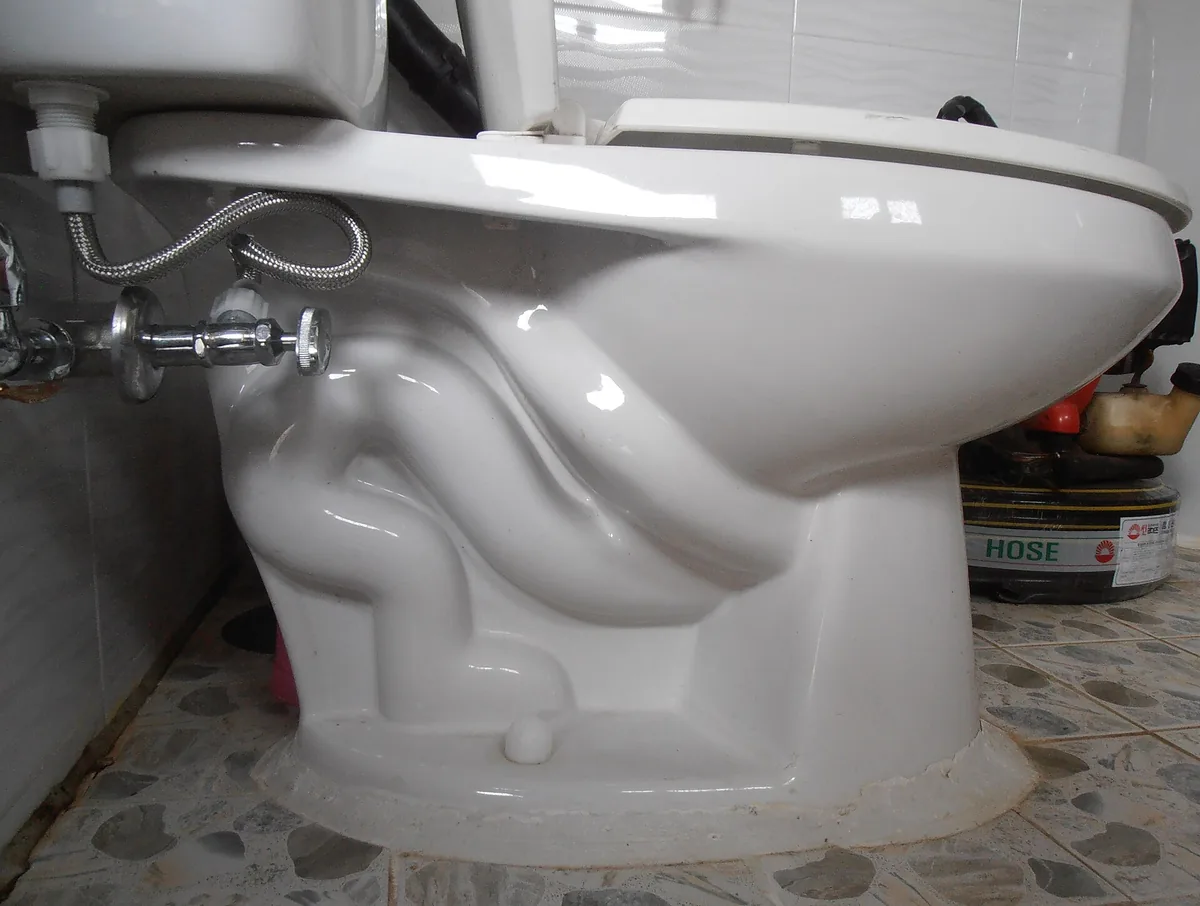
- Dry the floor and the outside of the toilet completely. Then lay dry paper towels around the base and under the supply line.
- Check them after the next few flushes. Where they get wet first tells you a lot.
- Wet under the supply line or the shutoff valve on the wall: the leak is likely at the line or its connection.
- Wet around the base, especially toward the back, and only after a flush: that points to the seal under the toilet, often the wax ring.
- Drips running down from the tank: it could be the tank bolts or the tank itself.
- Beads of water all over the outside of the tank on a humid day can just be sweating (condensation), not a leak.
Source: Stock photo by Sarang on Wikimedia Commons, public domain. Not a Chris Can Fix It job photo.
What not to do
- Don't keep flushing over and over "to test it." Every flush can push more water under the floor where you can't see it.
- Don't try to lift or reset the toilet yourself, especially if the floor feels soft or spongy. That can mean the subfloor is already wet.
- Don't crank down hard on the bolts at the base. Porcelain cracks, and then you need a new toilet.
Know where the little shutoff valve behind the toilet is before you need it. If the bowl is filling up or water is spreading, turn that valve clockwise until it stops, and quit flushing. If it won't turn, use your main shutoff. My post on finding and testing your main water shutoff shows you how.
When to call
Any water leak is a same-day call for me, so if you see water at the base of the toilet, call me at (470) 999-7395 or book online. Stains on the ceiling below a bathroom, soft flooring, or a toilet that rocks are signs the leak has been going on for a while. If your toilet is also running between flushes, my running toilet flapper test is worth a look too.