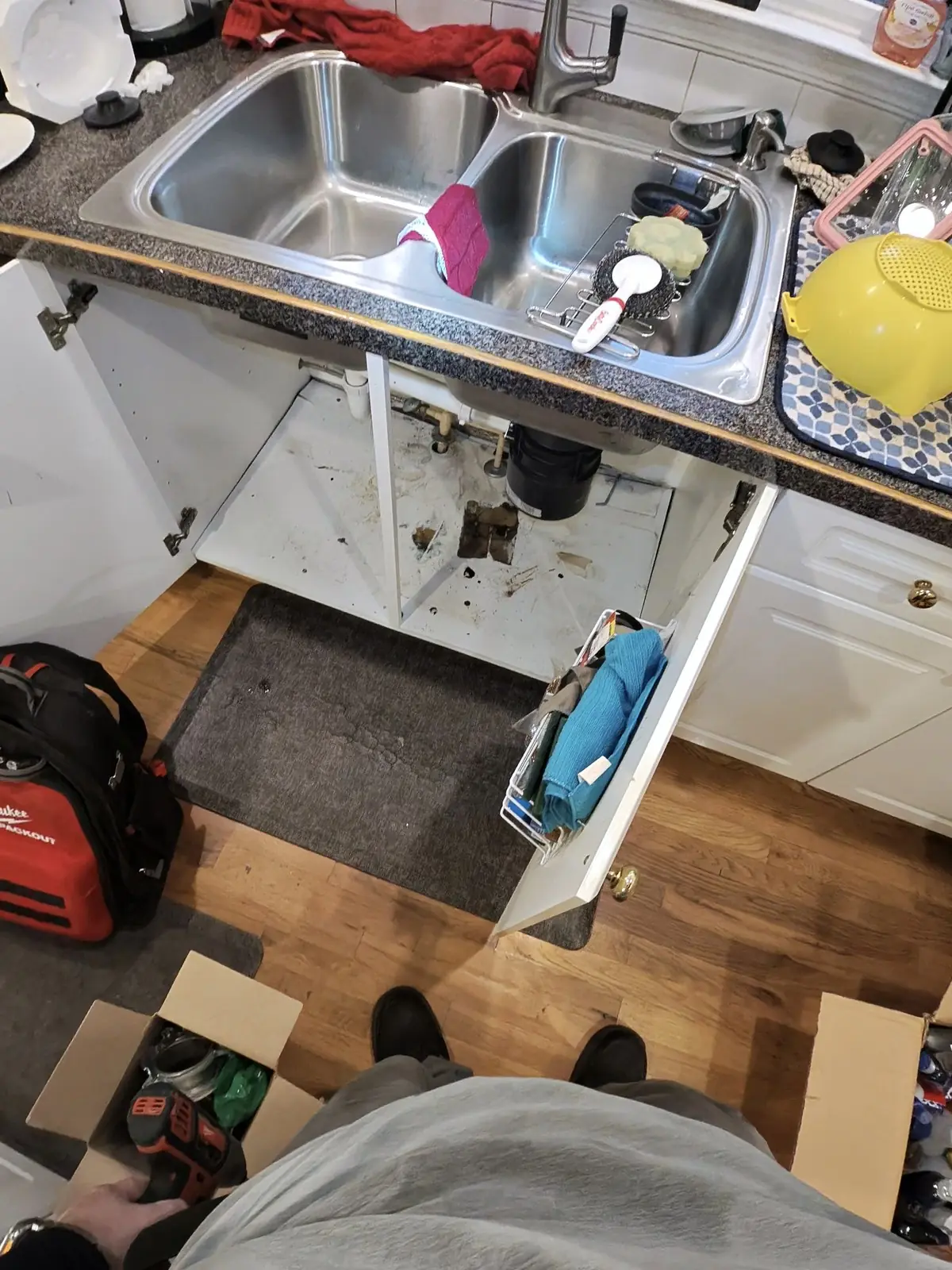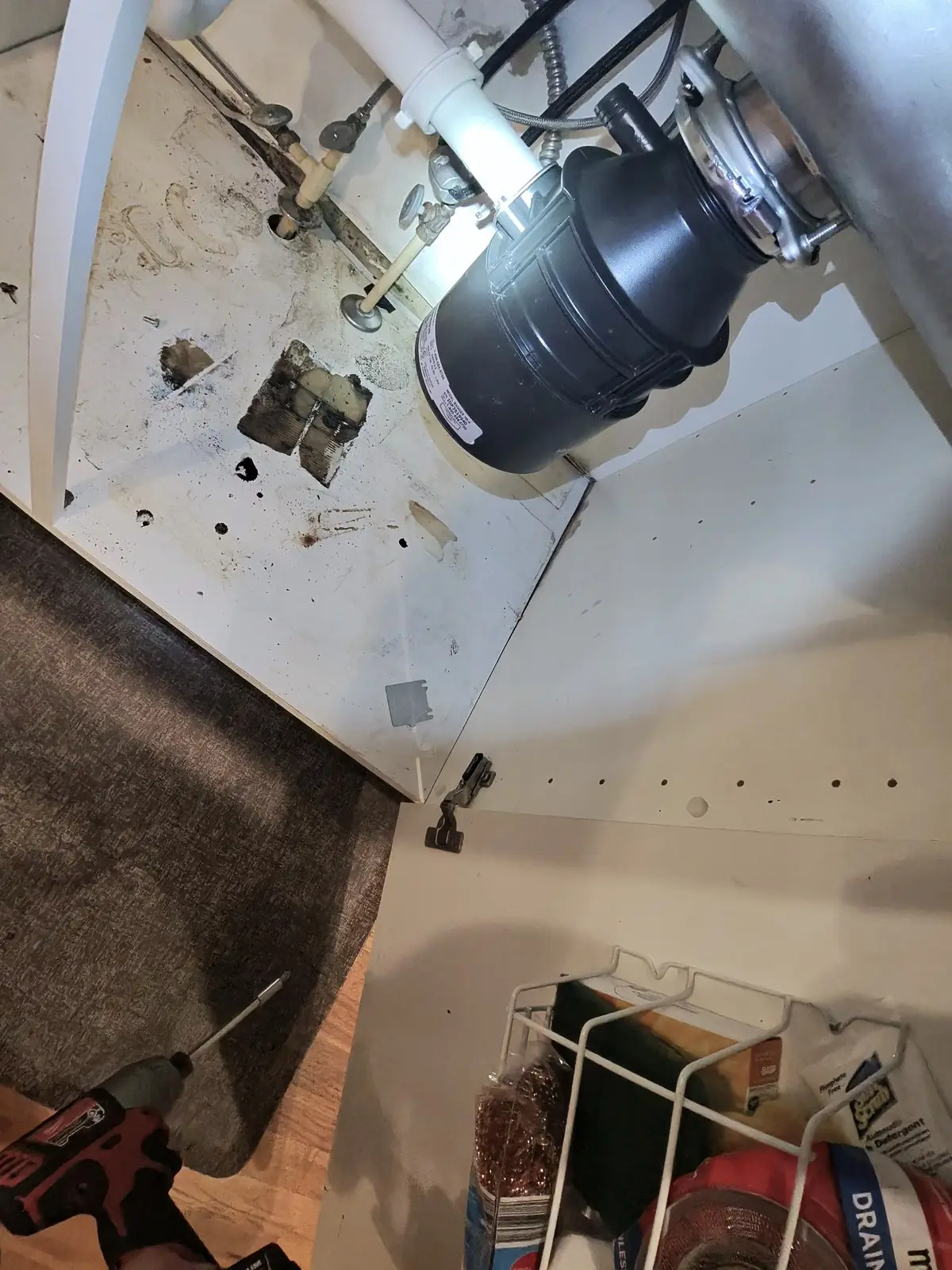
Clear it out and dry it off
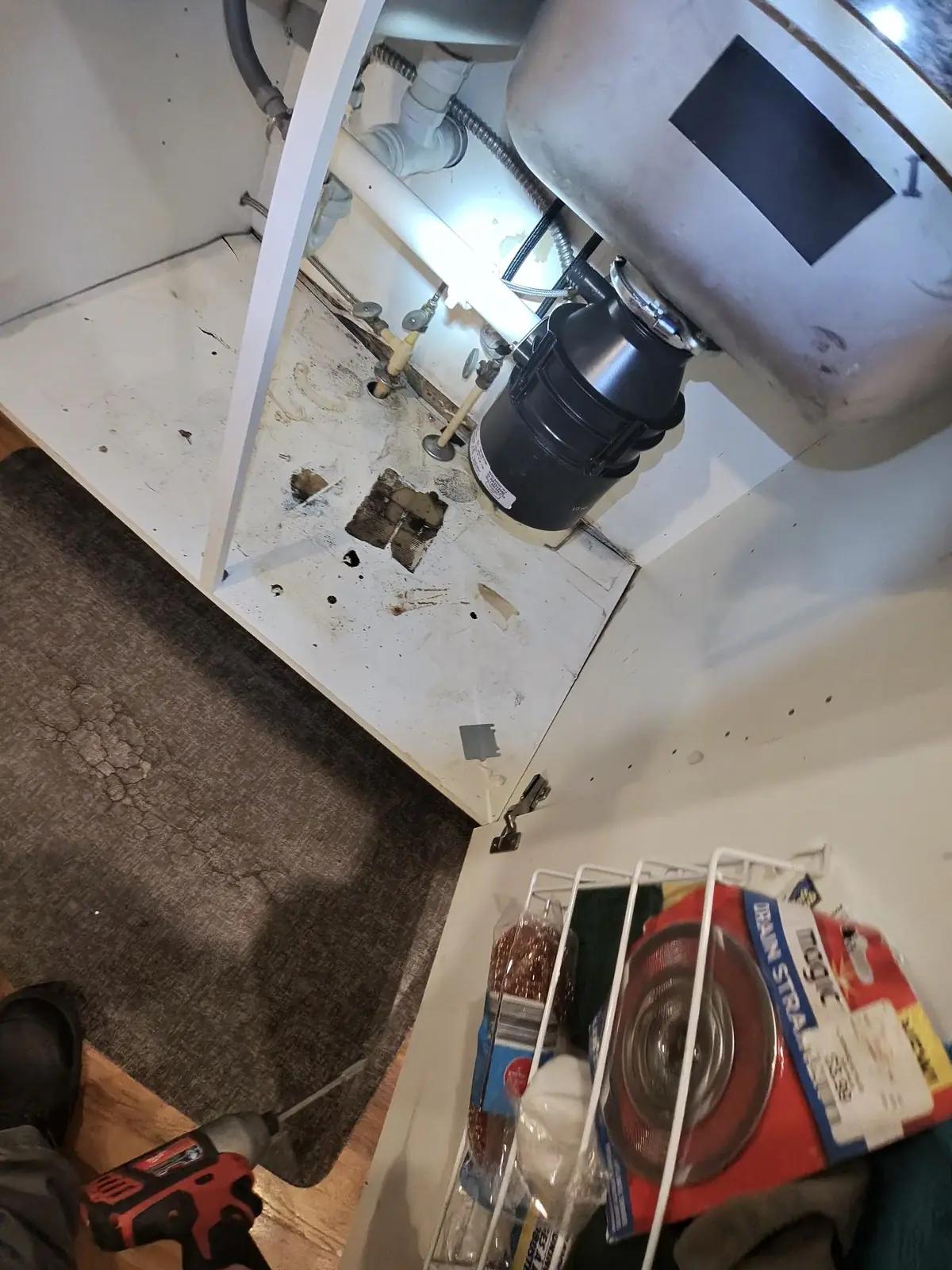
Take everything out from under the sink and wipe the cabinet floor dry. Lay down a few paper towels flat on the bottom. Then run the faucet for a minute, fill and drain the sink, and come back in ten minutes. A wet spot on the paper towel shows you right where the drip lands, and that points you to the source above it.
The usual suspects
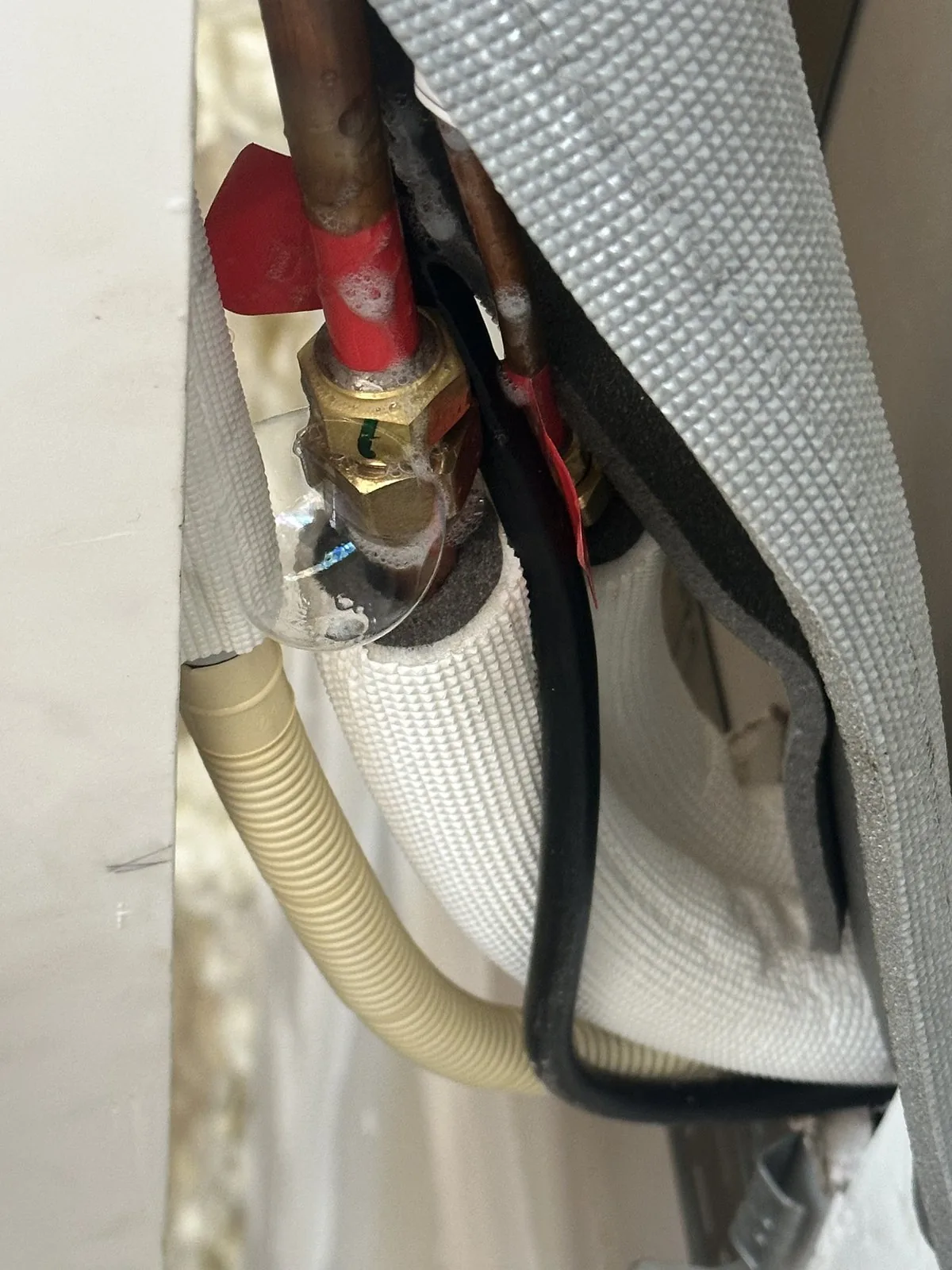
- Supply lines: The two flexible hoses running from the shutoff valves up to the faucet. Look for drips at the nuts, bulges, or rust on braided lines.
- Drain connections: The curved trap and the plastic slip nuts under the sink can work loose. A slow drip there usually shows up only while water is draining.
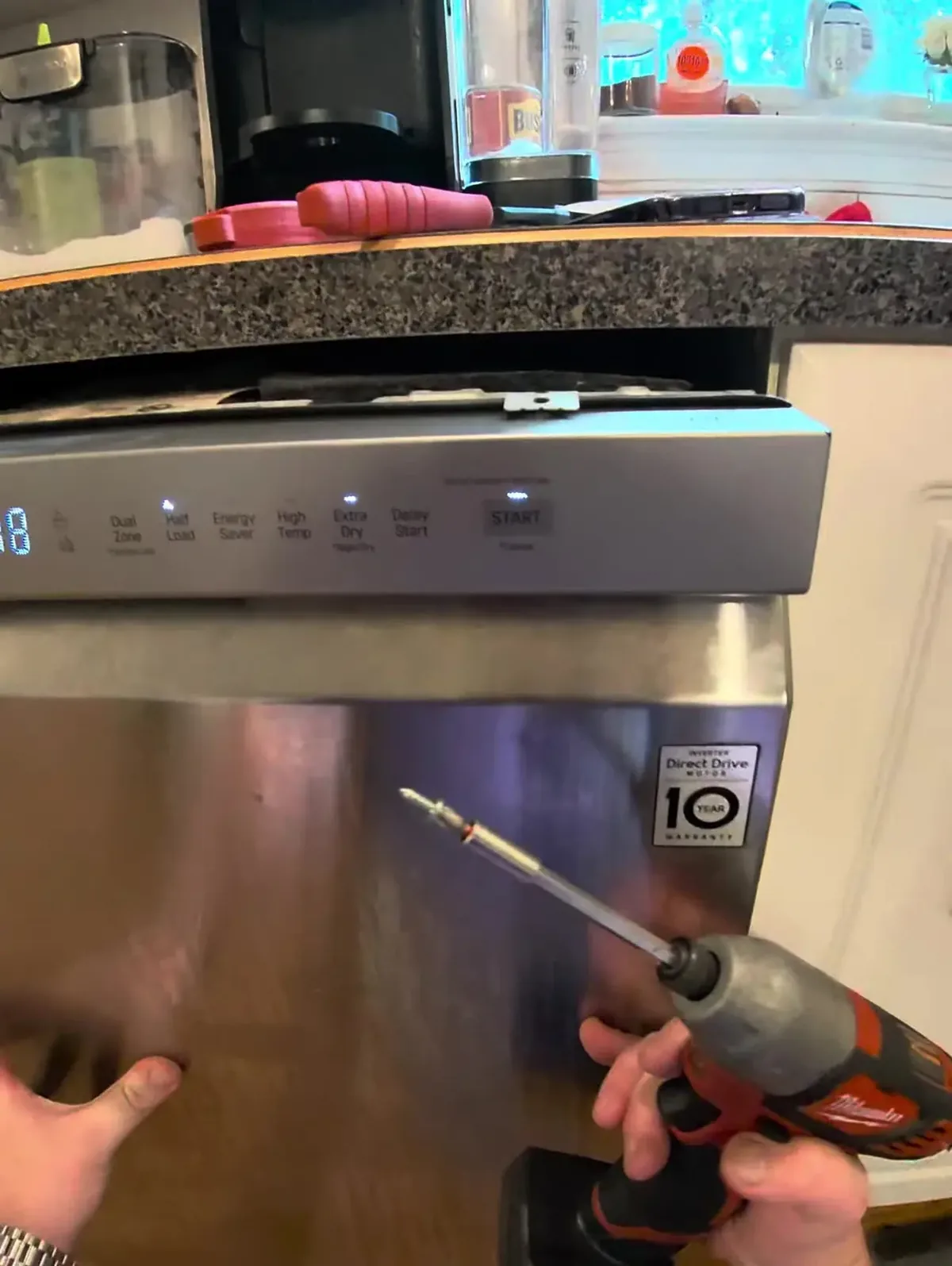
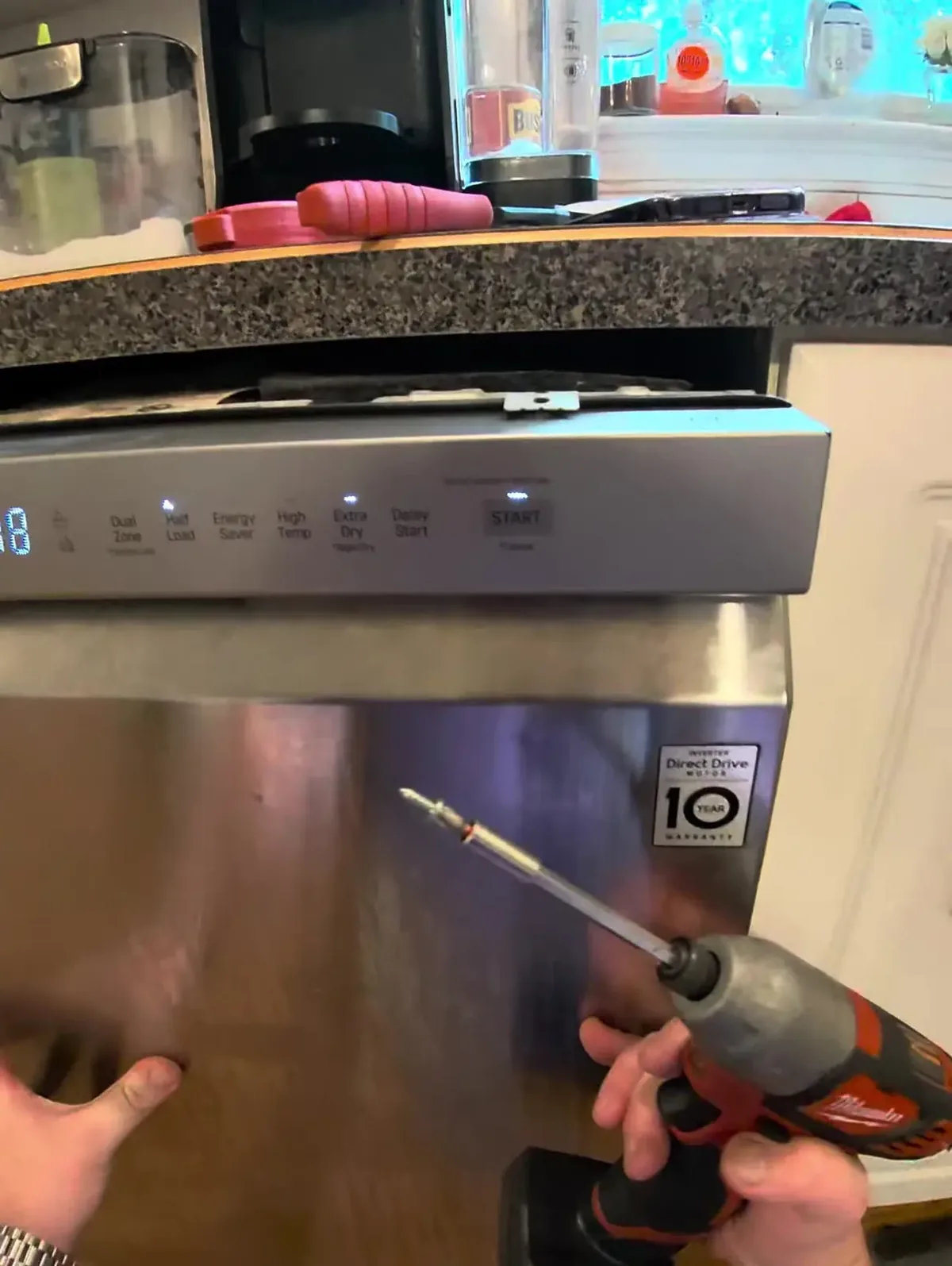
- Dishwasher drain hose: It connects near the disposal or the drain. Check it while the dishwasher is pumping out.
- Disposal: A leak from the bottom of the disposal body itself is a sign the unit is wearing out.
Keep a small flashlight and a dry paper towel under the sink. Once a month, run your hand along the supply lines and drain while the water runs. It takes thirty seconds and catches a slow drip before it ruins the cabinet.
What to do if you find one
If water is actively leaking, turn off the shutoff valves under the sink and put a bowl under the drip. Before you reach near the disposal, switch it off and unplug it, and never put your hand inside it. A plastic slip nut can be snugged by hand, but don't crank on fittings with tools, and don't force a stuck valve. A soft cabinet floor, a leaking disposal, or a drip you can't find needs a pro. Call me at (470) 999-7395 or book online for a $79 diagnostic.