Signs a door seal is leaking
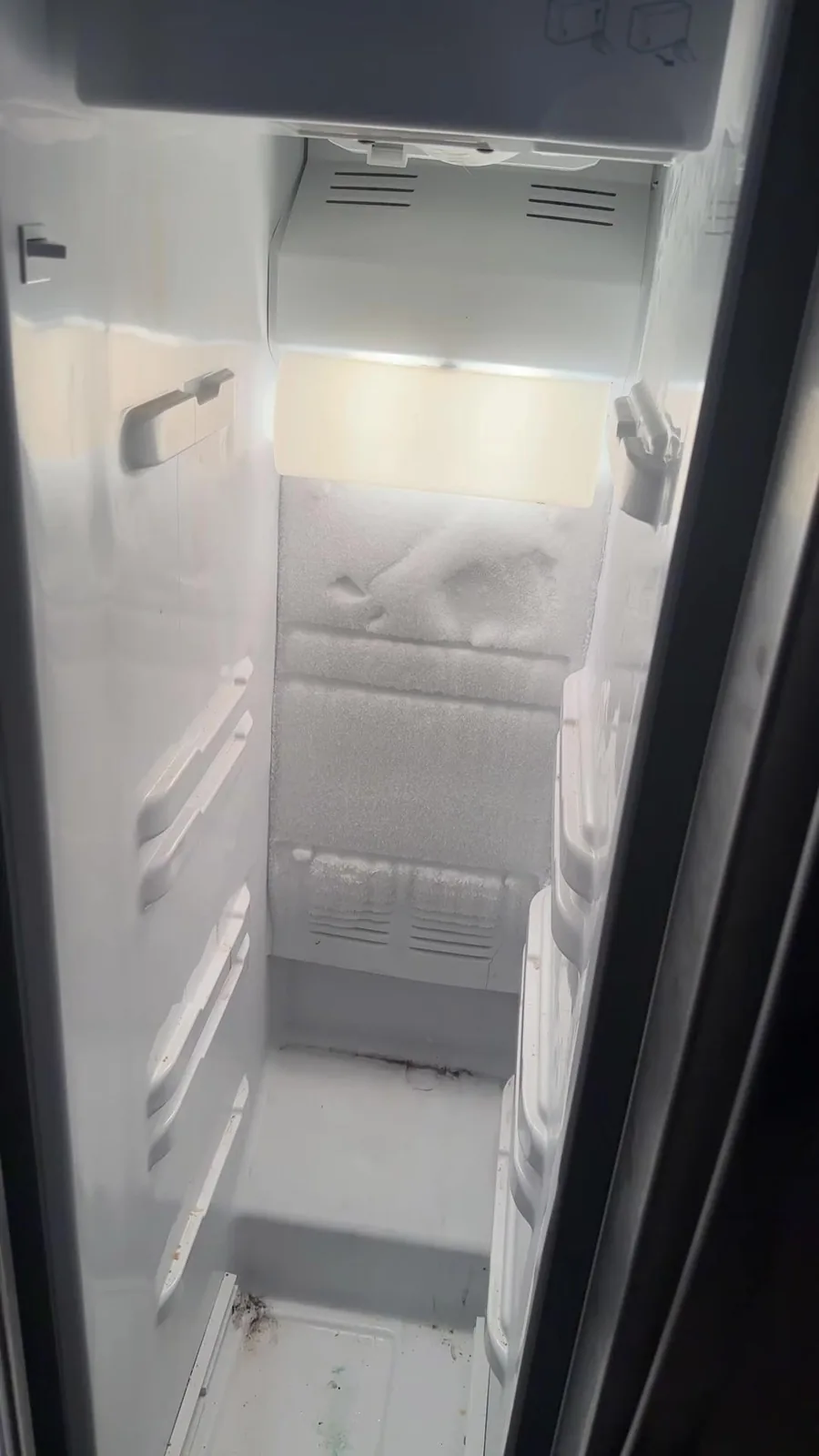
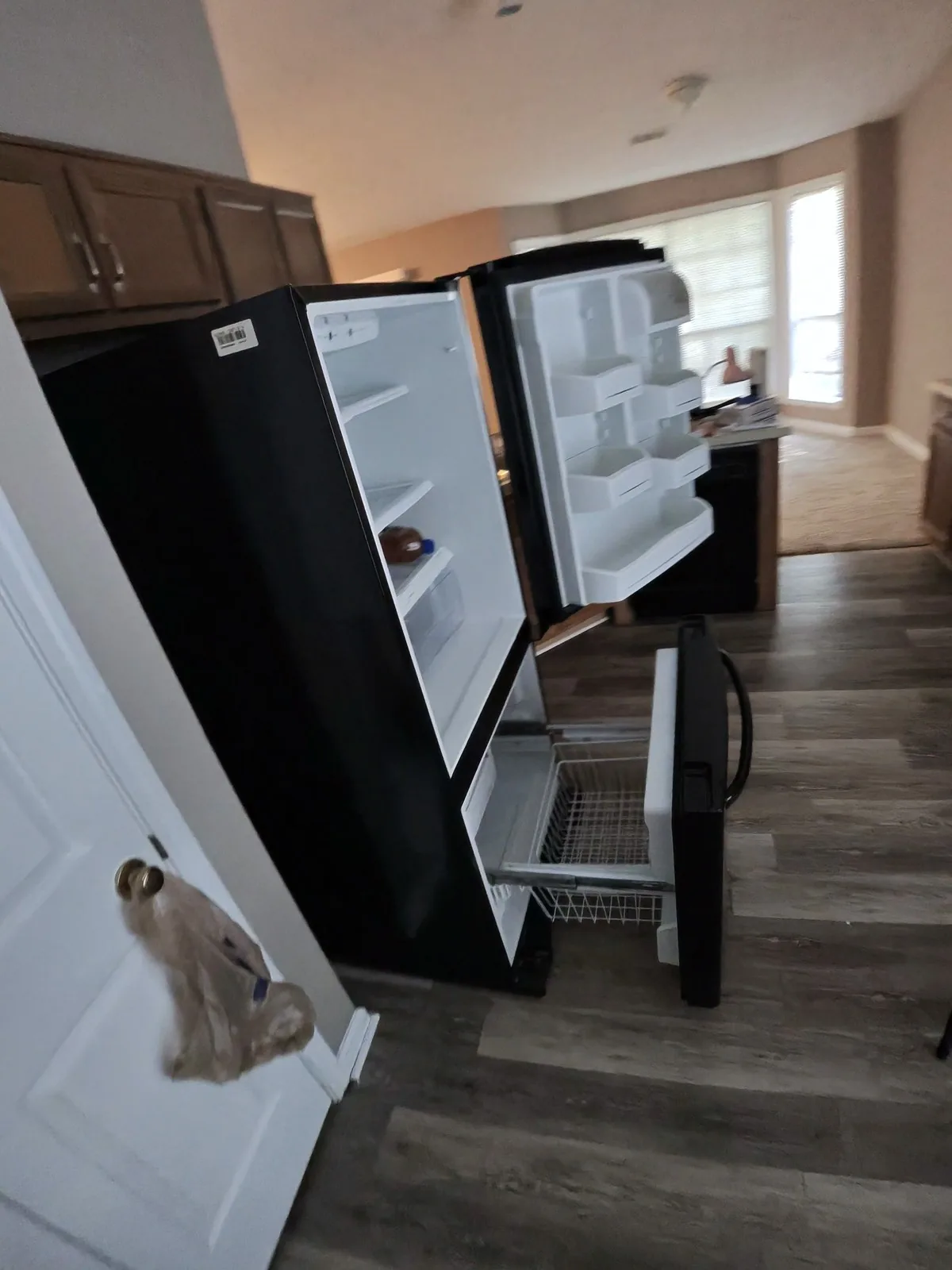
- Frost or ice building up on the back wall or around the door of the freezer.
- The fridge seems to run all the time, or the sides feel warmer than usual.
- Sweat or water droplets along the door edge.
- A door that drifts open or doesn't close on its own.
Frost like this can come from a few different things, but a door that isn't sealing is one of the most common, and it's the easiest to check yourself.
How to do the paper strip test
- Take a strip of printer paper or a dollar bill.
- Open the door, lay the strip across the seal, and close the door on it.
- Pull the strip out slowly. You should feel a little drag. If it slides out with no resistance, that spot isn't sealing.
- Move around the whole door, top, bottom, both sides, and the corners. Do the freezer door too.
Put a flashlight inside the fridge pointing at the door, turn off the kitchen lights, and close the door. If you can see light leaking out around the edge, that's where the seal is gapping.
Clean the seal first
A lot of seals that fail the test are just dirty. Sticky spills and crumbs keep the rubber from sitting flat.
- Wipe the seal and the cabinet edge it presses against with warm, soapy water and a soft cloth. Get into the folds.
- Dry it well, then run the paper test again.
- Move anything inside that's poking out and holding the door open a crack, like a tall bottle or an overstuffed door shelf.
- Don't pry, stretch, or cut the seal, and don't chip frost out of the freezer with a knife or a screwdriver.
When to call
If the seal is torn, flattened, or still fails the paper test after a good cleaning, it may need a new gasket, or the door may need adjusting. And if the freezer keeps frosting up with the door shut tight, or the fridge isn't holding cold, something else may be going on. Call me at (470) 999-7395 or book online for a $79 diagnostic.